Culture and Institutions in the Economic Growth of Japan by Juro Teranishi
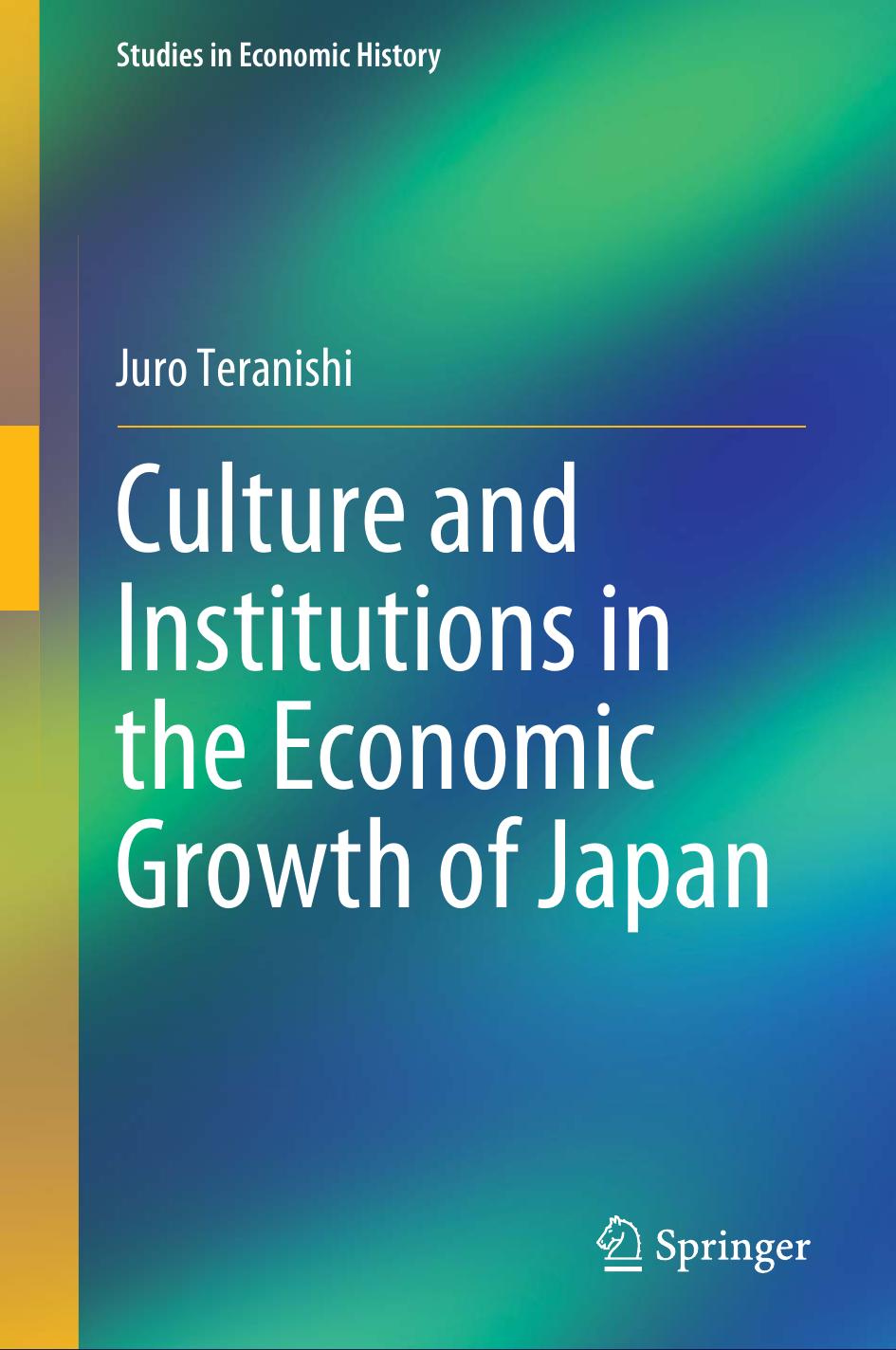
Author:Juro Teranishi
Language: eng
Format: epub, pdf
ISBN: 9784431556275
Publisher: Springer Japan
5.1.1.3 The Birth of Feudalism and Land
In the shÅen-kÅryÅ system established at the end of the Heian era, the aristocracy, the top of which comprised imperial families, or the large temples and shrines, were the ultimate owners of manors. Their income was mainly composed of two sources: income granted by official positions, the source of which was tax revenue at the imperial court and provincial governorsâ offices, and rent incomes from manors held as family property. The rent incomes, obtained by the aristocracy, other influential families, and the like, were a sort of residual income and, at the end of the Heian era, comprised the major part of the income of the class. After the establishment of the Kamakura bakufu (samurai government), the first bakufu of the samurai class, however, the property right of the class as ryÅke and honjyo of manors was significantly encroached.
The basic governance mechanism of the shÅen-kÅryÅ system was the appointment of civil servants to positions called shiki of administrative and judicial roles of manors and state-owned lands. The shiki were appointed by the provincial governorsâ offices (kokuga) and were hereditary posts allowed by the imperial court. They were endowed with the right to obtain some percentage of income (tokubun) out of the total products of land. Since the shiki were authorized by the provincial governorsâ offices, these roles and income rights were considered in effect to be guaranteed by imperial authority. During the Heian era, manors were governed by shÅkan (manor official)-shiki or gesu-shiki, state-owned lands by gunji-shiki and kokushi-shiki and, after Minamoto Yoritomo established the Kamakura bakufu, two additional shiki related to the military role were introduced: shugo-shiki as the military governor of provinces, and jitÅ (estate steward)-shiki under the shugo as the actual agency to implement military and police activities and, at the same time, in charge of tax collection.
From the beginning of the Kamakura era, the jitÅ and manor-owning aristocracy class confronted each other fiercely. It is important to note that not only the Kamakura bakufu (1192â1333) but also the Muromachi bakufu (1336â1573) with the related shugo-jitÅ system was not considered to be a system replacing imperial local administration but rather as supplementary to it (Hall 1968). Just like various shiki in Heian era, jitÅ-shiki and shugo-shiki were appointed ultimately by the imperial court. Shogun Yoritomo himself was appointed by the imperial court and delegated the role to designate shugo-shiki and jitÅ-shiki. Both shugo and jitÅ were endowed with the right to obtain rent income (tokubun), however, so that this inevitably led to disputes and conflicts with the final owners (ryÅke and honjyo) of manors who had retained the rights to residual income and control. The shugo and jitÅ were eager to obtain the control right of their land, and the honjyo and ryÅke wanted to recover the income right allotted to the shiki of the shugo and jitÅ.
In the disputes, the bakufu took the stance to favor the shugo and jitÅ, most of whom were shogunâs housemen (gokenin), and quite often
Download
Culture and Institutions in the Economic Growth of Japan by Juro Teranishi.pdf
This site does not store any files on its server. We only index and link to content provided by other sites. Please contact the content providers to delete copyright contents if any and email us, we'll remove relevant links or contents immediately.
Life 3.0: Being Human in the Age of Artificial Intelligence by Tegmark Max(5558)
The Sports Rules Book by Human Kinetics(4388)
The Age of Surveillance Capitalism by Shoshana Zuboff(4293)
ACT Math For Dummies by Zegarelli Mark(4049)
Unlabel: Selling You Without Selling Out by Marc Ecko(3663)
Blood, Sweat, and Pixels by Jason Schreier(3625)
Hidden Persuasion: 33 psychological influence techniques in advertising by Marc Andrews & Matthijs van Leeuwen & Rick van Baaren(3565)
The Pixar Touch by David A. Price(3439)
Bad Pharma by Ben Goldacre(3428)
Urban Outlaw by Magnus Walker(3396)
Project Animal Farm: An Accidental Journey into the Secret World of Farming and the Truth About Our Food by Sonia Faruqi(3221)
Kitchen confidential by Anthony Bourdain(3090)
Brotopia by Emily Chang(3056)
Slugfest by Reed Tucker(3004)
The Content Trap by Bharat Anand(2927)
The Airbnb Story by Leigh Gallagher(2857)
Coffee for One by KJ Fallon(2638)
Smuggler's Cove: Exotic Cocktails, Rum, and the Cult of Tiki by Martin Cate & Rebecca Cate(2541)
Beer is proof God loves us by Charles W. Bamforth(2463)
